

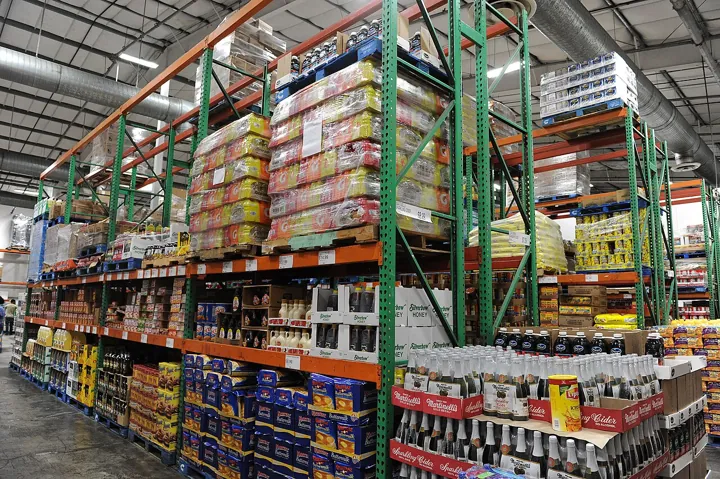
- Description
- A warehouse
- Source
- Casey Deshong · original page
- Licence
- PD Public domain
 Matrix: Storage
Where and how the product’s data is stored, modeled, historized, protected, retained and then removed.
In brief
- 8 dimensions, levels 0 to 5, 110 criteria.
- Tool: run an assessment by choosing “Storage”.
- Levels and criteria: original synthesis, references cited at the bottom of the page.
What concerns the retention of the product’s data: locations and layers, table model, history, backup, retention period, storage security, physical performance and cost. The flows that feed the storage belong to the “Ingestion” theme, those that transform it to the “Processing” theme.
8 dimensions, six levels (0 to 5) and 110 observable criteria. To place your product: open the assessment for this theme. The calculation rules are here.
Overview#
Each cell is the level’s signature for the dimension.
| Dimension | 0 · Handcrafted | 1 · Locally tooled | 2 · Shared | 3 · Industrialized | 4 · Integrated and governed | 5 · Autonomous |
|---|---|---|---|---|---|---|
| Layered organization | Data dumped in bulk into files or a single database, with no distinction between raw and usable. | One location per source. | Raw separated from usable. | Formalized layers: raw, validated, ready to use. | Layers by business domain, under the responsibility of owners. | Layers driven by versioned definitions and monitored automatically. |
| Model and integrity | Tables copied from the source systems, with no model of their own. | Tables identified and named. | Facts separated from analysis axes. | Relationships declared and integrity checked. | Model documented, changes reviewed. | Model evolving without breakage, blocking checks. |
| Historization and traceability | Only the latest value is kept; the previous one is overwritten. | Dated copies from time to time. | Dates and source carried by the rows. | Dimension history and atomic loads. | Replay and provenance. | History queryable and explained automatically. |
| Retention and lifecycle | Everything is kept indefinitely, or deleted at random. | Useless data identified. | Periods written down by data family. | Periods justified and purges traced. | Archiving, minimization and erasure propagated. | Policy applied and checked automatically. |
| Backup and restore | No backup of its own: you rely on the storage itself. | Full backup, manual or scheduled. | Automatic, monitored backups, restore described. | Recovery objectives set and restore tested. | Point-in-time restore, protected copies. | Recovery rehearsed and automated. |
| Storage security | Shared accounts or uncontrolled access to storage locations. | Named accounts. | Rights by group, encryption at rest, secrets protected. | Rights reviewed, access logged, network restricted. | Data classified, protected according to class. | Automatic detection and control. |
| Physical performance | Tables with no indexes and no thought given to physical layout. | Indexes on keys. | Indexes chosen from actual queries. | Storage adapted to usage, maintenance scheduled. | Aggregates and load tests. | Optimization guided by measured usage. |
| Capacity and cost | Storage size unknown; you find out when it is full. | Free space checked by hand. | Volume measured, alert before saturation. | Growth forecast, cost known, storage tiers. | Costs allocated, cold data moved. | Automatic sizing and cost anomalies. |
The dimensions of the global model most concerned are Data sources and flows, Data quality, Security and compliance and Availability and performance; this theme details their storage side.
Organization and model#
Layered organization#
Are raw, validated and ready-to-use data distinguished, and who can read what?
| Level | Signature | Criteria to meet |
|---|---|---|
| 0 · Handcrafted | Data dumped in bulk into files or a single database, with no distinction between raw and usable. | Starting point: no criteria. |
| 1 · Locally tooled | One location per source. |
|
| 2 · Shared | Raw separated from usable. |
|
| 3 · Industrialized | Formalized layers: raw, validated, ready to use. |
|
| 4 · Integrated and governed | Layers by business domain, under the responsibility of owners. |
|
| 5 · Autonomous | Layers driven by versioned definitions and monitored automatically. |
|
Reports read only data whose level of trust is known; a source error does not contaminate the published figures.
Model and integrity#
Do the tables follow a model designed for analysis, and is integrity verified?
| Level | Signature | Criteria to meet |
|---|---|---|
| 0 · Handcrafted | Tables copied from the source systems, with no model of their own. | Starting point: no criteria. |
| 1 · Locally tooled | Tables identified and named. |
|
| 2 · Shared | Facts separated from analysis axes. |
|
| 3 · Industrialized | Relationships declared and integrity checked. |
|
| 4 · Integrated and governed | Model documented, changes reviewed. |
|
| 5 · Autonomous | Model evolving without breakage, blocking checks. |
|
The same figures come out of all reports, and a join does not silently change a total.
Data lifecycle#
Historization and traceability#
What happens to a value that changes, and can you tell where a row comes from?
| Level | Signature | Criteria to meet |
|---|---|---|
| 0 · Handcrafted | Only the latest value is kept; the previous one is overwritten. | Starting point: no criteria. |
| 1 · Locally tooled | Dated copies from time to time. |
|
| 2 · Shared | Dates and source carried by the rows. |
|
| 3 · Industrialized | Dimension history and atomic loads. |
|
| 4 · Integrated and governed | Replay and provenance. |
|
| 5 · Autonomous | History queryable and explained automatically. |
|
You can answer “what was the figure on that date?” and explain why a figure has changed.
Retention and lifecycle#
How long is each piece of data kept, why, and how is it removed?
| Level | Signature | Criteria to meet |
|---|---|---|
| 0 · Handcrafted | Everything is kept indefinitely, or deleted at random. | Starting point: no criteria. |
| 1 · Locally tooled | Useless data identified. |
|
| 2 · Shared | Periods written down by data family. |
|
| 3 · Industrialized | Periods justified and purges traced. |
|
| 4 · Integrated and governed | Archiving, minimization and erasure propagated. |
|
| 5 · Autonomous | Policy applied and checked automatically. |
|
You keep neither too much (risk and cost) nor too little (loss of useful history); erasure requested by a person is possible.
Protection#
Backup and restore#
If data is lost or corrupted, how quickly and how completely can it be recovered?
| Level | Signature | Criteria to meet |
|---|---|---|
| 0 · Handcrafted | No backup of its own: you rely on the storage itself. | Starting point: no criteria. |
| 1 · Locally tooled | Full backup, manual or scheduled. |
|
| 2 · Shared | Automatic, monitored backups, restore described. |
|
| 3 · Industrialized | Recovery objectives set and restore tested. |
|
| 4 · Integrated and governed | Point-in-time restore, protected copies. |
|
| 5 · Autonomous | Recovery rehearsed and automated. |
|
An outage or a handling error costs a planned recovery, not the loss of the product.
Storage security#
Who can read, modify or take away the stored data, and how do you know?
| Level | Signature | Criteria to meet |
|---|---|---|
| 0 · Handcrafted | Shared accounts or uncontrolled access to storage locations. | Starting point: no criteria. |
| 1 · Locally tooled | Named accounts. |
|
| 2 · Shared | Rights by group, encryption at rest, secrets protected. |
|
| 3 · Industrialized | Rights reviewed, access logged, network restricted. |
|
| 4 · Integrated and governed | Data classified, protected according to class. |
|
| 5 · Autonomous | Automatic detection and control. |
|
Sensitive data stays within its perimeter, and abnormal access leaves a trace.
Performance and cost#
Physical performance#
Does the physical layout of the data (indexes, partitions, formats) serve the actual queries?
| Level | Signature | Criteria to meet |
|---|---|---|
| 0 · Handcrafted | Tables with no indexes and no thought given to physical layout. | Starting point: no criteria. |
| 1 · Locally tooled | Indexes on keys. |
|
| 2 · Shared | Indexes chosen from actual queries. |
|
| 3 · Industrialized | Storage adapted to usage, maintenance scheduled. |
|
| 4 · Integrated and governed | Aggregates and load tests. |
|
| 5 · Autonomous | Optimization guided by measured usage. |
|
Reports display quickly and consistently, even as the data grows.
Capacity and cost#
Do you know how much space you use, how much it costs, and when it will run out?
| Level | Signature | Criteria to meet |
|---|---|---|
| 0 · Handcrafted | Storage size unknown; you find out when it is full. | Starting point: no criteria. |
| 1 · Locally tooled | Free space checked by hand. |
|
| 2 · Shared | Volume measured, alert before saturation. |
|
| 3 · Industrialized | Growth forecast, cost known, storage tiers. |
|
| 4 · Integrated and governed | Costs allocated, cold data moved. |
|
| 5 · Autonomous | Automatic sizing and cost anomalies. |
|
Data growth is a budgeted decision, not a surprise.
The dimensions are inspired by the references cited below; the levels and the criteria are an original synthesis, not a reproduction of a framework. They are offered to be discussed and adapted, not as authority.
Sources and verification#
- Microsoft Learn — What is the medallion lakehouse architecture? (Azure Databricks) — bronze (raw), silver (validated), gold (enriched) layers; the raw layer keeps the original state and allows reprocessing; a recommendation, not an obligation
- Kimball Group — Dimensional Modeling Techniques — grain, surrogate keys, slowly changing dimensions (types 1, 2, 3…)
- Microsoft Learn — Architecture strategies for disaster recovery (Azure Well-Architected Framework, RE:09) — RTO and RPO by criticality tier, tested restore, recovery exercises, plan review about every six months
- GDPR, Article 5(1), points (c) and (e) — text on the CNIL website — minimization (data “limited to what is necessary”) and storage limitation
- ISO/IEC 27040 — Storage security — security standard for storage systems (media, management, applications and services); only the scope was verified, the standard is paid
- DAMA International — DAMA-DMBOK2 — the “Data Storage and Operations” domain; paid reference, therefore not read line by line
