

- Description
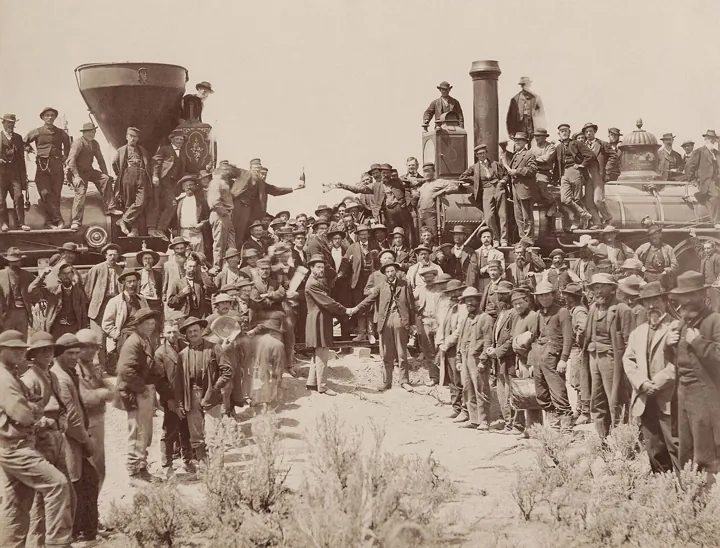
- A historic handshake at the joining of the transcontinental railroad
- Source
- Andrew J. Russell / Adam Cuerden · original page
- Licence
- PD Public domain
 Client relationship and the need
Understanding the request and breaking work down: the biases that distort the need.
A successful project solves the right problem. This family describes the biases that distort understanding of the need: hearing in the request what confirms the solution already imagined, overvaluing what has been specified, fearing the unknown, or optimising one's own part without seeing the whole.
Countermeasures are about method: start from the problem before the solution, observe the real work, test with users who were not involved in the design.
The endowment effectWhat we own, or what we specified ourselves, seems more valuable than before we had it. Where it strikes (scope, content negotiation, existing solutions to replace), how to spot it and defend against it.Ambiguity aversionWe prefer a risk whose probabilities we know over a risk whose probabilities we do not know, even when the second is at least as favorable. Where it strikes (choosing a vendor, technology, hiring), how to spot it and guard against it.Need confirmation biasIn a client's or user's request, we hear what validates the solution we had already imagined. Where it strikes (requirements gathering, workshops, specifications), how to spot it and how to defend against it.Expert biasThe expert overestimates the reach of their field and the reliability of their forecasts, and ignores other avenues. Where it strikes (consulting, architecture, choice of method), how to spot it and how to defend against it.Local optimization (“end of the chain”)Everyone optimizes their part of the work without seeing the effect on the whole. Where it strikes (batching, relationships between teams, DevOps), how to spot it and defend against it.
